
Political science · Teaching portfolio

A classroom built around doing.

My students negotiate, investigate, design programs, test explanations, and defend their reasoning. I want them to leave a course knowing how to make a judgment when the answer is not already in the reading.

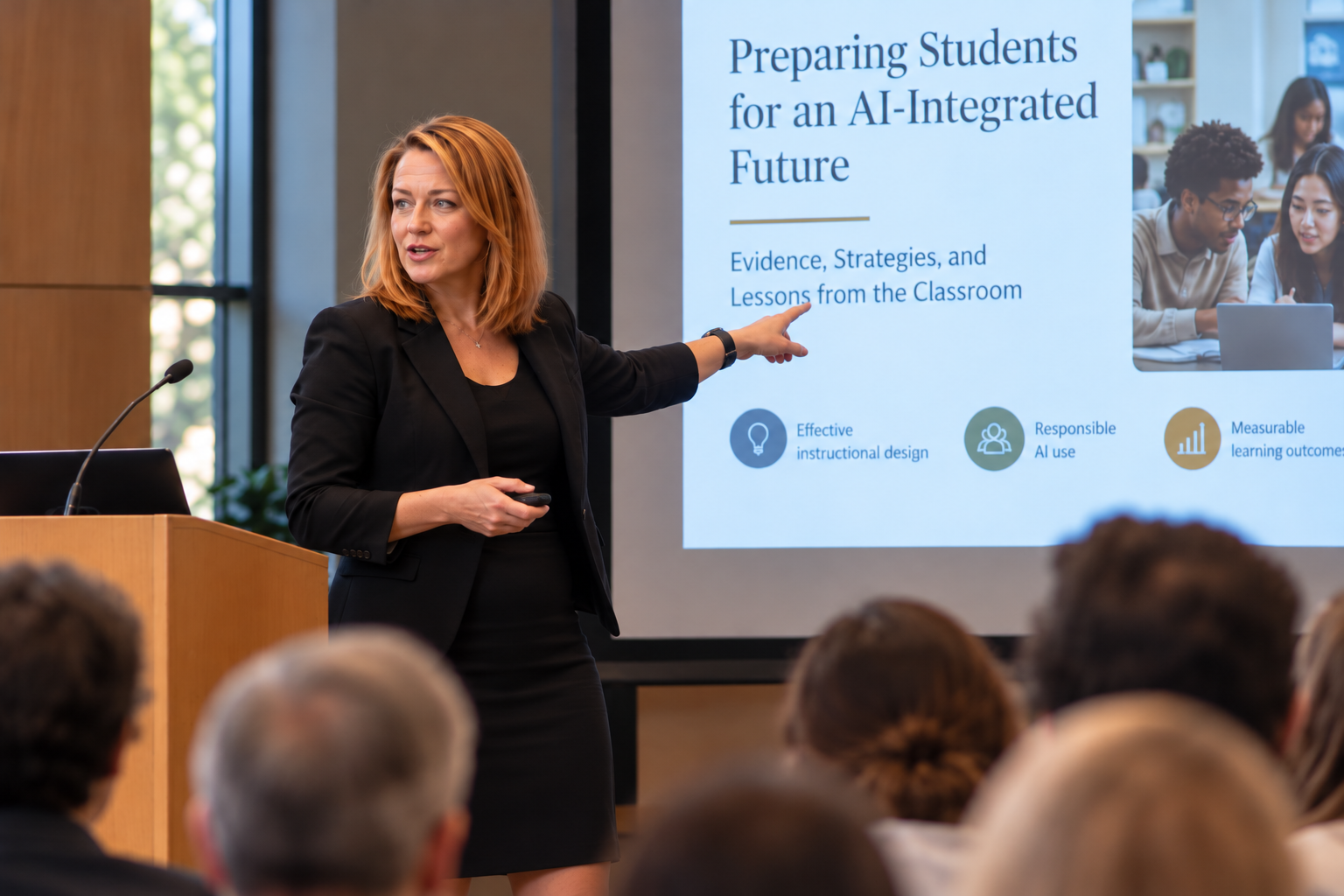
Laura D. Young presenting to an academic audience about evidence, strategy, and AI-integrated learning
Illustrative editorial presentation on teaching in an AI-integrated future
Not just knowing the theory. Having to use it.

The Studio presents the software I have built for learning research methods. This page presents the assignments, classroom experiences, and mentoring that give that work its purpose.

Selected teaching designs

What students actually do.

Four examples from political science, research methods, and advanced seminars. Each puts students in a position where they must make, justify, and revise decisions rather than reproduce a set of definitions.

Editorial illustration related to international relations and political conflict01 / Role play & diplomacy

International relations as a simulation.

Political theories become consequential when students have interests to represent, alliances to negotiate, and conflicting goals to manage. My collaborative Game of Thrones teaching work uses familiar narratives to make strategic decisions and international relations theories more concrete.

The challengeMake a political choice while other actors have competing incentives.
The thinkingApply IR theory to bargaining, credibility, cooperation, and conflict—not simply name a concept.
Two university students walking on campus while discussing notes, illustrating field observation and survey research02 / Field inquiry & surveys

Take a question into the field.

Students observe a campus or public setting, separate what they see from what they infer, and turn that experience into a political or social research question. They decide what is an outcome, what might explain it, and what evidence would actually test their claim.

The challengeTurn a real observation into concepts, variables, and an appropriate measure.
The thinkingDefend questionnaire wording, consider rival explanations, and state what a convenience sample cannot establish.
See field-methods example ↗Field methods · Photo: George Pak / Pexels
Editorial illustration of a university seminar environment03 / Senior seminar & authorship

An AI critique is not a research paper.

For a literature-review outline, students can use AI to interrogate an argument's organization and spot gaps. They then compare its suggestions against actual scholarly readings, reject unsupported claims or references, and make the final decisions themselves.

Student submitsA revised outline, the AI interaction transcript, and a short account of what the student accepted or changed.
The thinkingInformation literacy, metacognition, research judgment, and responsibility for authorship.
Read capstone research ↗Sample assignment practice
United States Capitol building as an editorial image for public policy teaching04 / Program design & evidence

Design an intervention worth testing.

In applied program-design work, students develop a proposal for a public or community problem rather than stopping at a general statement of concern. They begin with a concrete program idea and must make choices about the population served, the need, and what success would look like.

The challengeMove from a promising idea to a coherent, feasible public-service proposal.
The thinkingSpecify a target group, explain the logic of the intervention, and consider how outcomes could be evaluated.
How this connects to mentoring ↗Public administration & CJCR
Research methods checkpoint

Auditing a weak measure.

Students examine a supplied measure—such as the number of political-news articles a person remembers in seven days—for reliability, validity, random and systematic error, and alternative explanations. Then they revise a measure from their own project.

What the assignment protects

The student's methodological choices.

Students do not merely accept an operationalization or a sampling plan. They learn to identify its vulnerabilities, draw a reasonable generalization boundary, and explain the compromises behind their design.

Research on learning and pedagogy

I study teaching as seriously as I practice it.

My coauthored work looks at scaffolding, simulations, accessible political science instruction, and scenario-based inquiry. These are published contributions, distinct from the tools collected in Studio.

2025 · Journal of Political Science Education

An Assessment of Scaffolding in Senior Capstone Courses

Examines how structured support can help students develop and complete independent research papers.

Journal article ↗
2018 · Journal of Political Science Education

Using Game of Thrones to Teach International Relations

Brings narrative and political simulation into the teaching of international relations theory.

Journal article ↗
2019 · Political Science Ancillary Materials

Classroom Activities for OpenStax American Government

Collaborative learning activities that bring introductory American government into more applied classroom settings.

Full publication details ↗
2018 · IGI Global book chapter

Bringing the Study of American Government to Life in a Diverse Classroom

Approaches to internationalization and personalization for a diverse student body.

Full publication details ↗
2017 · ACM SIGCSE symposium

Cybersecurity: Scenario-Based Inquiry for Engagement in Computer Literacy Education

An interdisciplinary application of scenario-based inquiry to computer literacy learning.

Conference publication ↗
Mentorship & undergraduate research

From a course paper to work with a future.

In Paper to Publication, Senior Seminar, honors supervision, and directed study, I help students move from a broad interest to a defensible research question, credible evidence, substantive revision, and a clearer scholarly voice.

That work includes research on environmental policy, clean energy, public health risks, water governance, and other topics students choose to pursue. Mentoring is an apprenticeship in judgment; there is no shortcut to making an argument you can defend.

See teaching and research mentoring record ↗
Illustrative small-group university mentoring scene
Illustrative editorial scene representing research mentoring.

Courses and learning environments

Research MethodsSenior SeminarPaper to PublicationInternational RelationsPolitical NegotiationAmerican GovernmentPublic PolicyEnvironmental Law & PoliticsGraduate Public Administration
Interactive research tools

Want to see the software behind the methods?

The Research Methods Studio houses the original design tools, assignment builder, and homework coach. This page focuses on the assignments and teaching practices those tools support.

Visit the Studio ↗